The engine starts, so the fuel pump must be working. That's a reasonable first thought when the car hesitates on an entrance ramp but behaves again at the next intersection. A pump doesn't always stop completely when it begins wearing, though, and a brief improvement can make the complaint difficult to demonstrate.
Before buying a replacement, note what the engine was doing when it lost power. Starting after a long stop, climbing with passengers, and idling after a hot drive place different demands on the fuel system. Those details help separate a supply problem from a weak ignition coil or an air leak.
1. The Engine Takes Longer to Start
A longer cranking period can mean fuel pressure isn't available quickly enough at startup. The engine turns at its normal speed but needs extra revolutions before it fires. The delay might be strongest after several hours parked, while restarting immediately after shutdown feels normal.
Pressure that bleeds away after shutdown can involve the pump's check valve, a regulator, or a leaking injector. A weak pump is another possibility, not the only one. Testing pressure buildup and how well the system retains it helps locate the fault. Repeated key cycling isn't a repair and doesn't prove which component is responsible.
2. Power Fades During a Sustained Climb
Fuel demand increases when the engine has to pull harder. A pump that supplies enough fuel at idle can fall behind on a longer hill or during highway acceleration. Instead of one sharp jolt, the car can feel increasingly flat as the demand continues. Backing off the accelerator reduces that demand and can make the engine recover.
At our shop, we evaluate pressure under the conditions that produce the complaint. An acceptable reading in the parking lot doesn't clear the pump. Restricted filters, supply problems, and inadequate electrical power can produce the same shortfall. Direct-injection engines also have separate low- and high-pressure sections that you must distinguish before condemning a pump.
3. The Engine Surges With a Steady Accelerator
You hold the pedal in one position, but the car repeatedly gains and loses its pull. Unstable fuel delivery can create that sensation when the mixture alternates between adequate and insufficient fuel. It may be easier to notice on a steady incline than during stop-and-go driving, where your foot is already moving.
Surging also occurs with ignition, airflow, transmission, and electronic throttle faults. A scan recording can compare fuel pressure, engine speed, and throttle commands during the event. A pressure change that consistently coincides with the hesitation carries more weight than a general complaint about uneven acceleration. Testing should establish a connection rather than treating surging as a pump diagnosis on its own.
4. Stalling Appears After the Car Gets Hot
A worn pump motor or a failing electrical connection can become unreliable after extended operation. The car runs through the morning, stalls later, and starts again after cooling. That recovery is frustrating because the vehicle can seem repaired by the time someone checks it. Heat-sensitive relays, control modules, and engine sensors can behave similarly.
The useful test is whether pressure and electrical supply disappear together. If pump power remains correct while fuel delivery stops, the pump becomes a stronger suspect. If power disappears first, the circuit needs investigation. Don't keep driving a vehicle that stalls in traffic; arrange transport for testing rather than waiting for another unsafe shutdown.
5. A New Tank Noise Accompanies the Performance Change
An electric fuel pump can make a brief, quiet hum during normal operation. A newly prominent whine from the tank, especially alongside hesitation or longer cranking, deserves attention. Noise alone doesn't establish low pressure. Fuel level, pump design, and the way sound travels through the body all affect what the driver hears.
A strained pump could be dealing with restricted supply, contamination, or an internal problem. Some failing pumps become intermittent without getting louder at all. Mention when the sound changed and whether it changes after refueling, but don't use a quiet pump as proof of health. Keep the conversation centered on measured delivery and the vehicle's symptoms.
Confirm the Supply Before Replacing the Pump
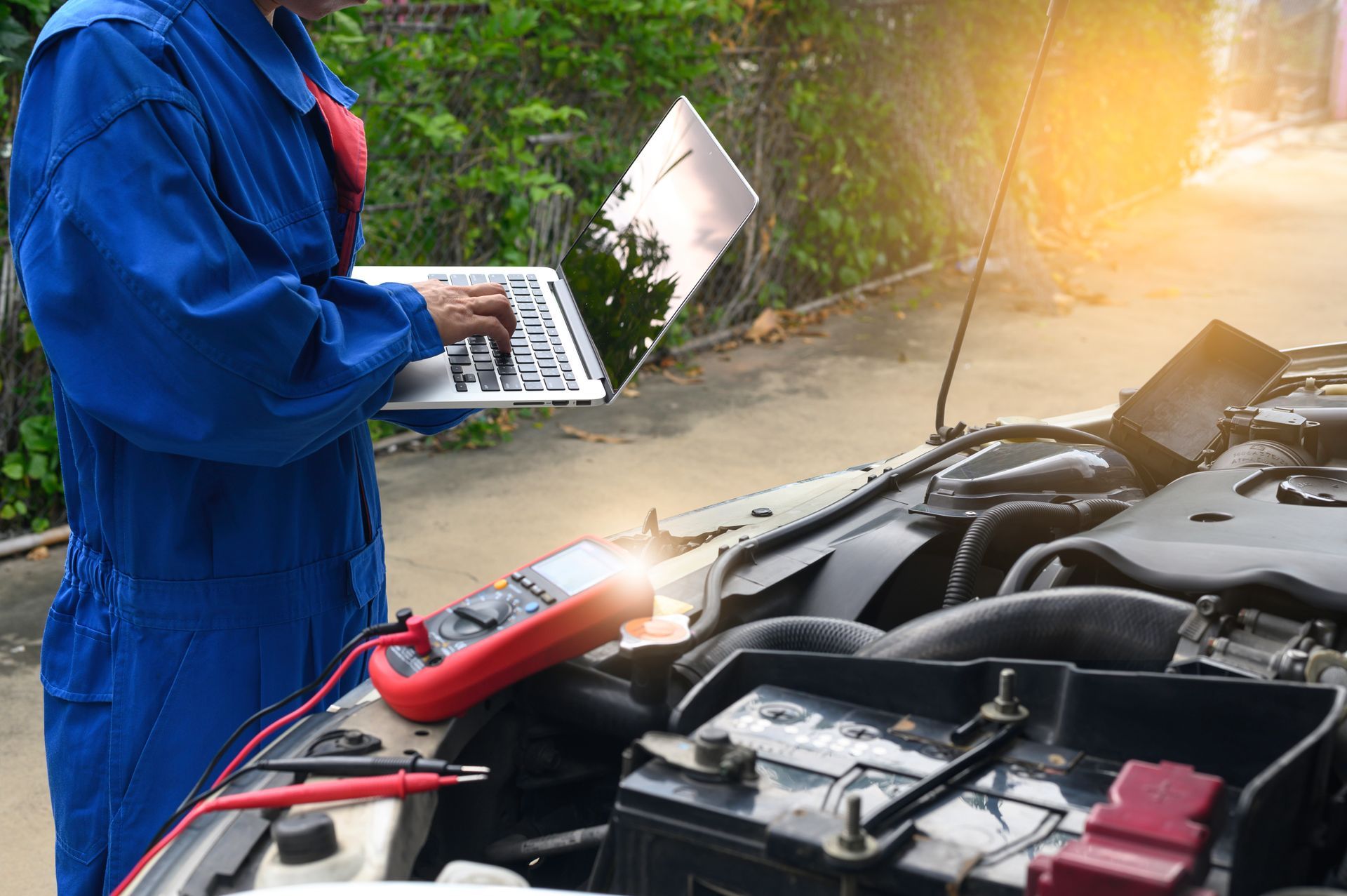
A fuel-system inspection should check pressure, delivery, and the electrical circuit. A connection can pass a basic continuity check yet lose too much voltage while the pump runs. We compare power and ground voltage drop with the appropriate specifications, then consider control commands and pressure-sensor accuracy where those systems are fitted.
Fuel-filter requirements belong in regular maintenance, but many modern filters aren't separate routine-service items. Follow the vehicle's design. Never loosen a pressurized fuel line to check delivery; you need proper equipment and pressure-release procedures.
Get Fuel Pump Diagnostics In Phoenix, AZ, With 19th Avenue Garage
19th Avenue Garage in Phoenix, AZ, can test fuel delivery and electrical supply while investigating hesitation or difficult starting. Describe whether the trouble begins after parking, during acceleration, or once hot.
Contact us to arrange fuel-system testing before committing to a fuel pump replacement.